
Blog Post: Community Alchemy: Turning Outdoor Spaces into Engines for Equity, Economy & Engagement

There’s something that shifts when people start looking at spaces differently.


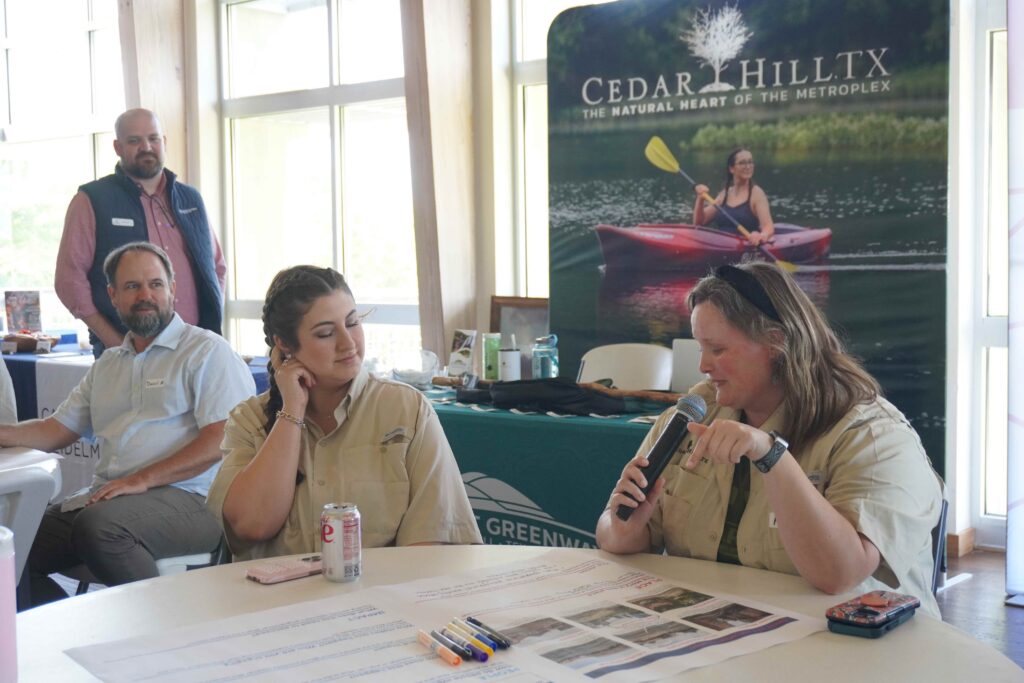
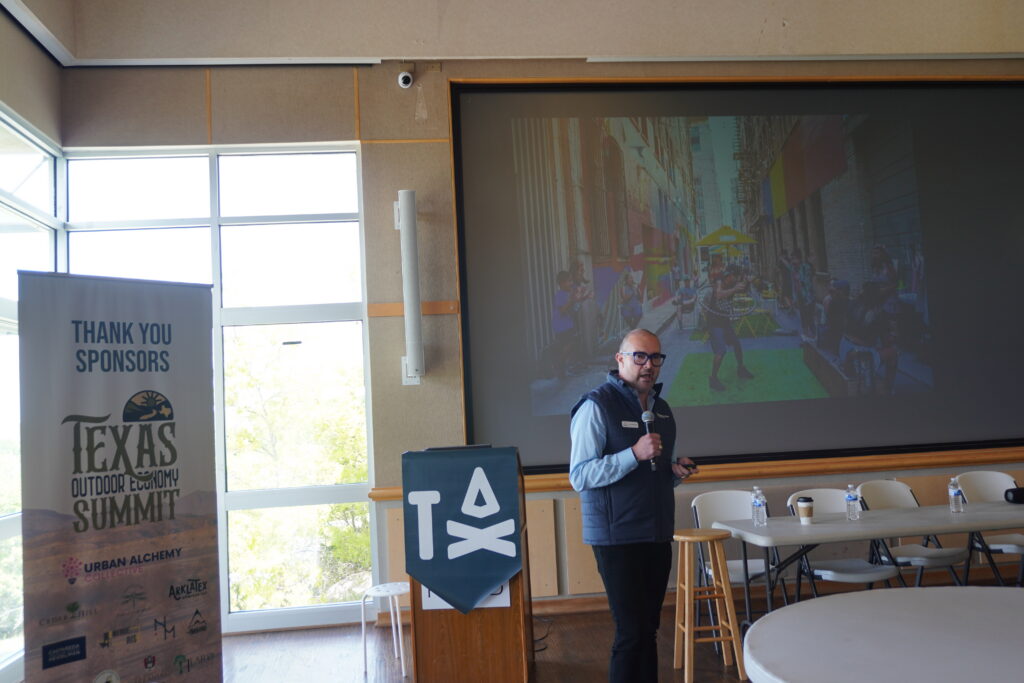
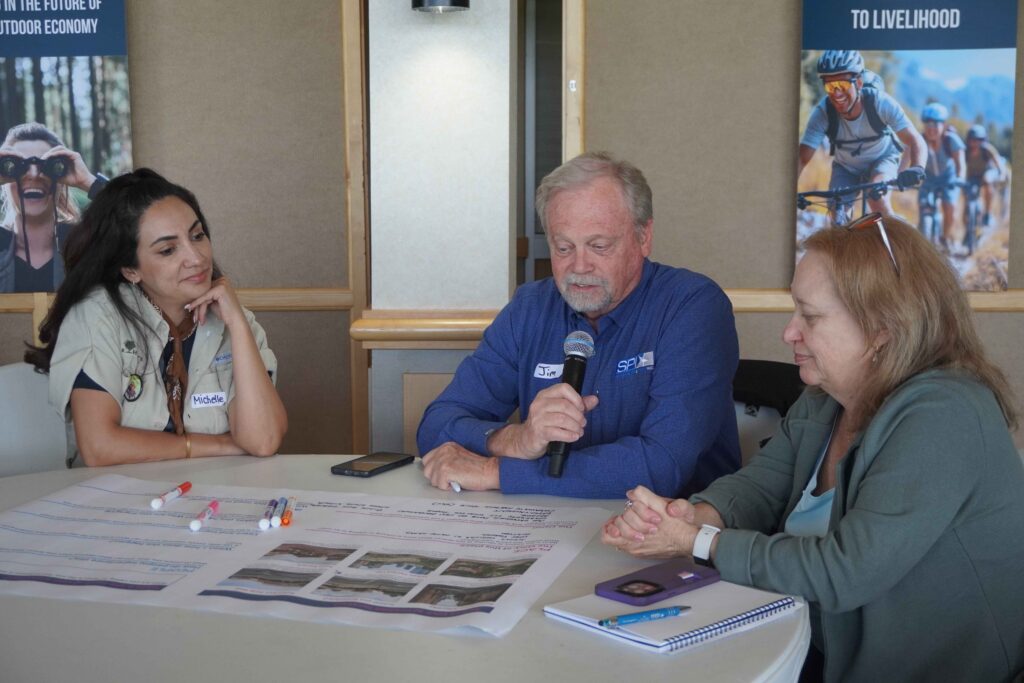
At the Texas Outdoor Economy Summit, we spent time exploring that shift through our Community Alchemy workshop. Not by talking about big plans or future projects, but by asking a simpler question:


What if the spaces we already have are enough?


Because in so many communities, the issue isn’t a lack of parks, plazas, or space. The issue is that these places, even when well-designed, don’t always become part of everyday life.


They exist, but they don’t always work.
They’re passed through instead of gathered in. Seen, but not experienced.


And that’s where activation comes in.


We talked a lot about the difference between space and place. A space is physical. It’s the pavement, the benches, the trees. A place is something else entirely. It’s how it feels, what happens there, who shows up, and why they come back.


The places people love aren’t always the most designed. They’re the ones that give people a reason to be there.


That’s also where the outdoor economy becomes more than a concept. When people choose to spend time somewhere, they stay longer. When they stay longer, they engage. And when that happens, local businesses, vendors, and communities benefit. It’s not just about recreation. It’s about creating environments where activity and connection naturally happen.


People. Place. Impact.


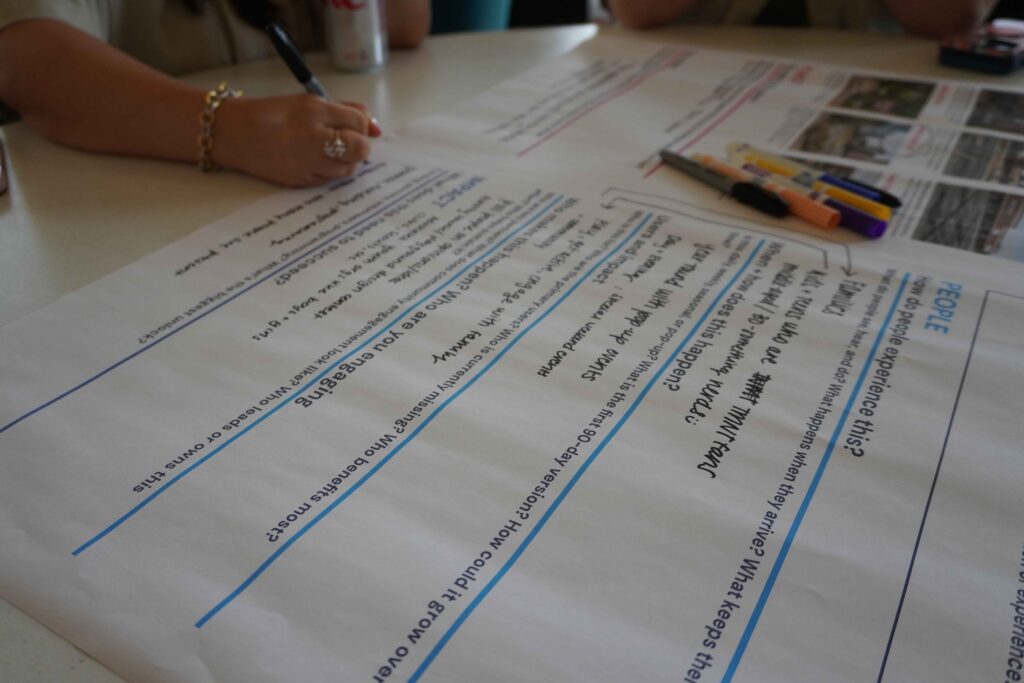
During the workshop, we framed this through a simple lens: place, people, and impact. Not as a checklist, but as a way of seeing more clearly.


Place is about understanding what’s already there. The history, the past, what this space used to be, and what it has meant to people over time. It’s about recognizing that every space already has a story, and thinking about how the next layer of that story gets written.


People is about who this is really for. Who uses the space today, who is missing, and who could be part of it in the future. It’s about when and how people show up, and who helps make that possible. The partners, the local voices, the advocates, the ones who bring energy and keep it going.


And impact is the why. What changes if this space starts to work differently. What becomes possible not just in the short term, but over time. It’s the long-term vision, the value it creates, and the role it plays in the life of a community.


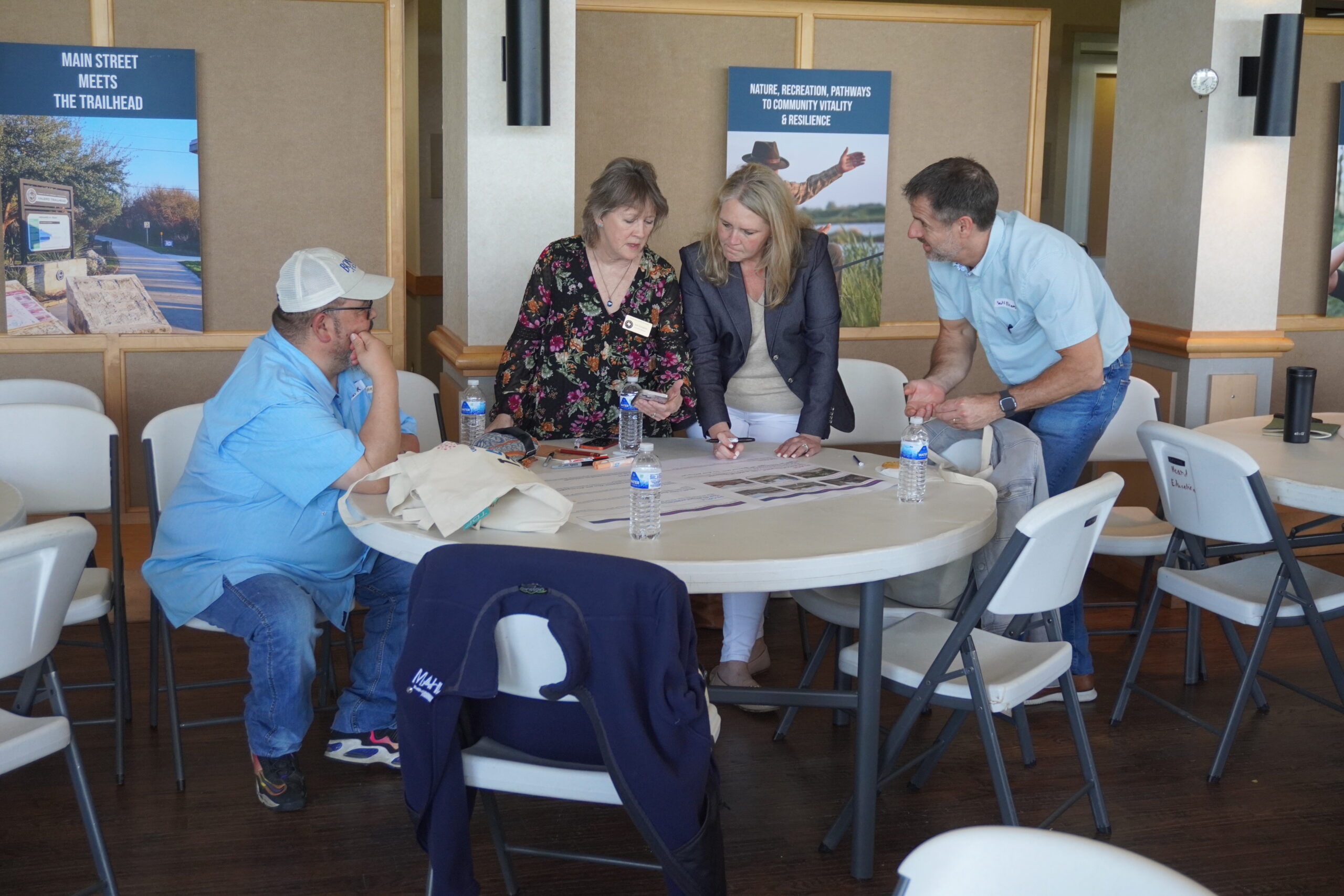
Once people started working through those questions, the ideas came quickly.


A schoolyard and vacant school became a haunted storytelling experience.
An empty lot turned into a Ninja Warriors-style parkour course.
Alleys, plazas, and trailheads started to feel less like leftover spaces and more like opportunities.


None of these ideas were about massive investment or long timelines. They were about seeing what was already there and building from it.


That’s really the heart of this work.


It’s not about creating something entirely new. It’s about unlocking what already exists, the stories, the people, the potential that’s often sitting just beneath the surface.


And when that starts to happen, you see a different kind of impact. Not just physical change, but shifts in how people relate to a place. More connection. More ownership. More energy.


By the end of the session, it was clear that the most important takeaway wasn’t any single idea. It was the realization that change doesn’t have to start with a big project.


It can start small.


It can start now.


And sometimes, it just starts with seeing a space in a new way.


Check Out Our Projects

Melissa Parks, Recreation, Trails, and Open Space Master Plan

With population growth exceeding 80% since 2020, Melissa is one of the fastest-growing cities in North Texas. The City faced increasing pressure to expand its parks, recreation, and trail system to keep pace with rapid growth and evolving community needs. Without a comprehensive framework to guide investments and connectivity, the City risked fragmented improvements. Residents expressed the need for more access to nature, stronger neighborhood connections, and amenities that serve a diverse and growing population.

Strategic Moves
Urban Alchemy Collective led the City’s first comprehensive Parks, Recreation, Open Space, and Trails Master Plan through an extensive engagement process that captured over 4,000 community inputs. Community priorities, including trails, shade, restrooms, indoor recreation, aquatics, and neighborhood parks, informed a data-driven strategy.

The plan advances equity and growth readiness across all six districts and introduces a connected trail network, new park concepts, strengthened open space conservation, and a 10-year capital roadmap with recommendations for operations, programming, and long-term financial sustainability.

Master Plan Outcome
Melissa in Motion provides a clear and actionable blueprint for the City’s next generation of parks and public spaces. The plan positions parks and trails as essential infrastructure that supports health, connection, and community identity. Early implementation is already underway, advancing high-impact projects that enhance quality of life and position Melissa as a regional destination for recreation and nature-based experiences.

Pleasanton Nature Park

Urban Alchemy Collective worked with the City of Pleasanton to reimagine a vacant lot near the airport into a nature-based community asset. Through an inclusive public engagement process, the project team envisioned a park featuring trails, passive recreation areas, sports fields, and spaces for gathering. The study area also explored future connectivity to surrounding residential and commercial development, blending natural systems with recreational amenities to create a park that feels both integrated and restorative.

Workforce of the Future Policy Lab

Urban Alchemy Collective partnered with the Better Futures Institute to facilitate and coordinate a one-day Policy Lab focused on the “Workforce of the Future.” The immersive workshop brought together Institute fellows, students, and startup interns for a series of collaborative discussions and activities. Designed to spark innovation and dialogue, the Policy Lab created space for participants to explore new approaches to workforce development, connecting research, policy, and community-driven solutions.

Project DC – District of Cattleman Square Community Vision and Master Plan

Cattleman Square, on the near westside of downtown San Antonio, is an area with deep cultural and historic roots that has experienced decades of disinvestment. Today, it faces growing pressures related to housing affordability, limited availability, and a rising unsheltered population. While the San Antonio Housing Trust owns key properties in the area, a more comprehensive, community-driven approach is needed to guide meaningful reinvestment.


Strategic Moves
The project is organized around three coordinated tracks addressing immediate needs and long-term transformation. Outreach partners are providing direct support to unsheltered individuals, while a broader coalition advances a Homeless Response Action Plan.

Urban Alchemy Collective is leading an eight-month, community-centered engagement process to define the future of Cattleman Square. Through more than 50 touchpoints, including public meetings, pop-ups, and one-on-one conversations, the process ensures a wide range of voices shape the vision.

Outcome
The work will result in a comprehensive master plan that translates community priorities into implementable strategies. Supported by market analysis and development feasibility, the plan will identify catalyst sites and position Cattleman Square for more inclusive and coordinated revitalization.